Archive for the ‘Legal’ Category

Labor’s Flawed Plan B: Become ROC Radicals

Wednesday, January 30th, 2013

Organized labor just had a tough week. First, it had to endure the report of devastating membership numbers that show that only 11.3 percent of the workforce is stuck in a union. Then, the pro-union National Labor Relations Board (NLRB) and the President who blindly supports labor had to face the reality that the Board was illegally constituted, and its recent radical decisions may soon be no more.

So after comically spinning about the numbers and ignoring the reality that the NLRB has questionable authority at best, it’s clearer than ever that labor needs a backup plan.

Josh Eidelson, a union organizer-journalistwrites in the American Prospect that the next generation of the so-called labor movement will be in the form of “alt-labor.” Eidelson devotes much of his article to the UNITE HERE-linked Restaurant Opportunities Center (ROC), a radical labor group that isn’t legally a union. Eidelson would know best: According to his blog, he was an organizer for UNITE HERE for five years, so undoubtedly, ROC is close to his heart. Groups like ROC are part of labor’s rebranding, trying to make itself more palatable to the employee of the 21st century (or even the latter half of the 20th, for that matter).

The problem is that ROC and others like it provide all of the problems of regular unions and none of the benefits. “Alt-labor” groups are convinced that they have managed to find the sweet spot that allows them to ignore the hard work posed by running a real union and to focus on well-publicized harassment and shakedowns. In an article published in Engage, a legal journal, this strategy is explained:

In a 2006 interview, Saru Jayarman, the Executive Director of Restaurant Opportunities Center (ROC), a worker center located in New York, said one of the primary benefits of not being classified as a labor organization is the ability to avoid certain legal duties associated with the union-member relationship.  According to Jayaraman, this includes not having to spend time and money arbitrating worker grievances because, unlike labor organizations, worker centers do not owe a duty of fair representation to workers. Second, worker centers have not considered themselves to be limited by the NLRA restrictions on secondary picketing and protracted recognitional picketing, and such conduct is a common tool used by these groups to convey their message.

Even with its ability to skate around the law, ROC has still managed to find itself in hot water. In July of last year, Rep. Darrell Issa (R-CA), Chairman of the House Committee on Oversight and Government Reform, wrote to the recently-departed Labor Secretary Hilda Solis to inform her of the pending investigation into ROC’s activities. The letter revealed that ROC and the restaurant it operates “have a history of disputes over wages,” and required “100 hours of free labor” of its supposed employee-owners.  The restaurant also had “serious health and sanitation violations.”

But Eidelson says that this is what labor will look like in the foreseeable future, and the AFL-CIO and Change to Win have both endorsed the worker center “movements.”

That’s to say that the future of labor lies in the louder, less-effective, and more abusive worker centers. Organized labor has to know that this will merely hasten its demise.

Obama Risked Executive Power To Give Labor Its Payback

Tuesday, January 29th, 2013

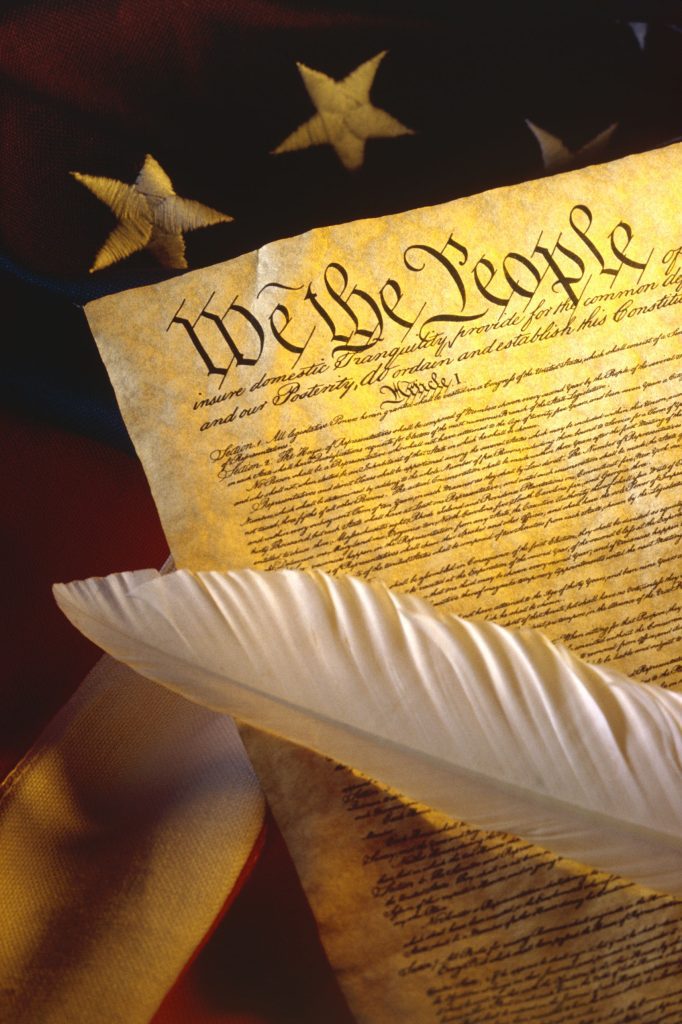
US ConstitutionIn President Obama’s recently extended quest to duly reward organized labor for helping him take the White House, he took a serious risk. When he couldn’t deliver “card check” with EFCA, Obama opted to illegally appoint three new members to the National Labor Relations Board (NLRB). The risk that Obama took was not only that his picks would be thrown out, but that the President’s recess appointment power would be eviscerated.

The Noel Canning decision coming out of the D.C. Circuit Court of Appeals does exactly that, calling into question the scope of the recess appointment power granted to the President in Article II, Section 2 of the U.S. Constitution. The Constitution states:

The President shall have power to fill up all Vacancies that may happen during the Recess of the Senate, by granting Commissions which shall expire at the End of their next Session. [emphasis added]

In Noel Canning, the D.C. Circuit invalidated the appointments to the NLRB for two reasons. The first was on the grounds that “the Recess” is not like all other recesses of the Senate, but rather only the recess that occurs between sessions of Congress, known as the intersession recess. The Senate leaves for recess at other points in the year, often revolving around holidays and the summer. Each Congress usually meets for two sessions over the two-year term which — in the modern era — typically begin and end based on the calendar year.  In this case, however, the Senate was not in recess, deciding to instead conduct pro forma sessions that continued the first session of the 112th Congress until January 3, 2012. On that same day, it started the second session of that term. The appointments were not made until the next day, after the second session had commenced.

Second, the court continued its analysis into the language of Article 2 to determine what “happen” means. In the past, courts had interpreted “happen” to mean “exist” and therefore, it would allow a president to make an appointment to a vacant position that became open prior to the recess. But the DC Circuit ruled that “happen” is more accurately interpreted to mean “arise,” meaning that the vacancy must occur during the intersession recess. In this case, there was no intersession recess on January 3, only the beginning of the second session of the 112th Congress. Even if a recess in between the sessions occurred, the only valid appointee would be Sharon Block, as she replaced Craig Becker. Becker’s term expired at the end of the first session of the 112th Congress, as he was a “recess” appointment in March 2010 (more on that in a moment). Richard Griffin and Terrence Flynn replaced members whose terms had ended in 2011.

The recess appointment power of the President, until Friday, had suffered few, if any, setbacks. But President Obama’s action was a unique one, due mostly to a strange new way of starting and ending sessions of Congress, which began in 2007, when Democrats controlled the Congress and George W. Bush was president. Senate Majority Leader Harry Reid (D-NV) ordered that the Senate never actually enter a recess by conducting pro forma sessions. Article I, Section 5, Clause 4 of the Constitution states:

Neither House, during the Session of Congress, shall, without the Consent of the other, adjourn for more than three days, nor to any other Place than that in which the two Houses shall be sitting. [emphasis added]

Reid, known for his schemes, came up with a plan to block Bush from making recess appointments. By holding a session every three days, even if for mere seconds, Democrats would be able to block any of Bush’s recess appointments. The new Senate calendar would involve the end of the old session and the start of the new on the same day, with no recess in between. We’ll call this the “Reid Calendar.” The Reid Calendar was employed in 2007 and 2008 for that purpose; Bush respected the Constitution and made no appointments.

Flash forward to 2012, with a Republican-controlled House of Representatives that, under Article I, Section 5, must approve the Senate’s calendar. Not surprisingly, Republicans used the Reid calendar. But unlike Bush, Obama opted to ignore the pro forma sessions and make the appointments to the NLRB anyway. Therein lies the fatal flaw that has now put the entire recess appointment practice under scrutiny.

How far back will this decision extend? Right now, that’s hard to say. But at least consider Craig Becker’s appointment, which occurred on March 27, 2010. First, this was an intrasession recess of the second session of Congress. Under Noel Canning, this would be invalid, because it is just “a recess” and not “the Recess” that occurs between sessions. Second, Becker’s seat had been open since 2008, meaning that it did not “happen” in the recess.

There could be a saving grace for Becker, however. The “de facto officer doctrine,” established in the 1995 Supreme Court case Ryder v. United States “confers validity upon acts performed by a person acting under the color of official title even though it is later discovered that the legality of that person’s appointment or election to office is deficient.” But there is also one exception, according to the Court: “We think that one who makes a timely challenge to the constitutional validity of the appointment of an officer who adjudicates his case is entitled to a decision on the merits of the question and whatever relief may be appropriate if a violation indeed occurred.”

All of this remains in the hypothetical realm until the Supreme Court takes on the case, which is very likely. Because other federal courts have ruled differently on the president’s recess appointment power, this creates a circuit split, meaning that there is different law in different parts of the country.

We knew that President Obama was willing to turn a blind eye to forced association for the sake of supporting labor on blocking right-to-work. But the NLRB appointments may prove to be his most extreme attempt at payback yet. Former Attorney General Ed Meese and Todd Gaziano of the Heritage Foundation deemed the appointments a ”constitutional abuse of high order.” The D.C. Circuit agreed. It may be only a matter of months before the Supreme Court agrees.

How much does President Obama think he owes organized labor? Enough to forever change the American presidency.

Surrounded By Scandal? Perhaps You Should Run Our Union

Friday, January 25th, 2013

crime money steal embezzle 2Although former speaker of the Connecticut House of Representatives Christopher Donovan came up short in his run for Congress, the Hartford Courant reports that he’s being encouraged to campaign to be the next head of the state’s AFL-CIO. Donovan has a great prerequisite: he’s already involved in a serious scandal.

A few months before the Democratic primary, seven people were indicted by a federal grand jury for conspiracy in directing illegal campaign contributions to Donovan. Among those were Donovan’s campaign manager and long-time aide, his finance director, and a union leader. According to the Wall Street Journal:

Prosecutors also disclosed that Ray Soucy, a former union official and a key figure in the probe, pleaded guilty Tuesday to conspiracy charges in the scheme, which supplied straw donors with cash so they could write checks to Mr. Donovan’s campaign committee.

In exchange, according to court documents, Mr. Soucy assured the co-conspirators that Mr. Donovan would kill legislation to close a loophole allowing roll-your-own tobacco shops to avoid collecting cigarette taxes. The bill didn’t come up for a vote in the state Legislature.

Since his defeat, not much has been heard from Donovan. And although he has not been accused of wrongdoing, the swirling scandal around him is par for the course for union officials.

In Minnesota, a father-son duo has been accused by the International Teamsters of embezzlement, bank fraud, racketeering, and other financial crimes. Bradley Slawson Sr. and Bradley Slawson Jr. of Local 120 are currently on unpaid leave from the union. The pair is said to have received payments from a Teamsters-owned bar — payments adding up to $140,000 between the two of them. Another teamster, Todd Chester, helped to coordinate those payments from the bar and has also been charged. Chester, described in the Star Tribune as “a family friend of the Slawsons” and “the father of one of Slawson Sr.’s grandchildren,” also received a questionable finder’s fee of $90,000 for the construction of a new union hall. The Star Tribune reported in December that the Independent Review Board (IRB) report included an “unsettling allegation… that one of the bar managers wanted to hold a fundraiser for a ‘nonexistent fake sick baby’ and direct the funds instead to a bar the union owns in Fargo.” The bar, the Teamsters Club in Fargo, North Dakota, hosted a victory party for Democratic now-Senator Heidi Heitkamp.

The Slawsons claim that this is just a “witch hunt” because the family broke away from Jimmy Hoffa Jr. in 2010. But this isn’t the first time the Slawsons have been in the news for misconduct. In 2009, the Department of Labor conducted an audit of Local 120’s records under its Compliance Audit Program (CAP) of the Labor-Management Reporting and Disclosure Act (LMRDA) and found that Slawson Sr.’s chapter committed recordkeeping and reporting violations. In 2000, a press release from Overnite Transportation Co. reveals that Slawson Jr. pled guilty to disorderly conduct charges for his actions at a strike of the company. The release says:

Slawson was found in contempt of court on May 8 for his self-admitted threats and coercion in connection with unrefuted claims that he struck one Overnite driver with a picket sign and locked another Overnite driver in a trailer while the driver was attempting to make a delivery at a customer’s facility. Slawson was ordered to keep away from Over[ni]te property and that of the trucking company’s customers for the purpose of assisting the union in any labor action against Overnite. He was also ordered to pay $500 to compensate Overnite for attorneys’ fees and costs.

Not surprisingly, Junior was also a big fan of EFCA.

Labor should go no further than its own backyard if it is looking to blame anyone for its declining numbers. Rampant crime and corruption are just line-items on the long list of reasons why organized labor slides deeper into irrelevancy.

The Short Memories of the “Recess” Appointment Supporters

Tuesday, January 22nd, 2013

The year 2007 doesn’t seem all that long ago. But that’s evidently long enough for organized labor and its supporters to conveniently forget about what constitutes a recess appointment.

Professor John Logan is the director of Labor and Employment Studies at San Francisco State University, and a supposed “expert on the anti-union industry and anti-union legislation in the U.S.” Logan provides a perfect example of this defective memory with his op-ed in The Hill this week. Logan is responding to two articles by Trey Kovacs of the Competitive Enterprise Institute and Fred Wzsolek of the Workforce Fairness Institute, both of which questioned the process around the appointments to the National Labor Relations Board (NLRB).

Recall the purported “recess” appointments to the NLRB by President Obama one year ago. Rather than waiting until the Senate was actually in recess to invoke his Article II, Section 2 power, Obama appointed Richard Griffin, Sharon Block, and Terence Flynn to the NLRB during a pro forma session. This means that the Senate has not officially recessed.

Though he recognizes that the Congress was in pro forma session, Logan dances around the constitutional details and argues that President Obama appointed these members in this way due to Republican obstruction.

Time for a history lesson.

The New York Times reported last year:

Senator Harry Reid of Nevada, the majority leader, began using pro forma sessions, lasting just seconds, in late 2007 to keep the Senate nominally in session and prevent President George W. Bush from making recess appointments.

The use of pro forma sessions was respected, often begrudgingly, by Republicans — until Obama’s appointments last year. Even the administration’s Office of Legal Counsel acknowledged this history in its legal opinion on the president’s actions.

What a difference a few years makes. Reid, the father of the pro forma session, declared “I support President Obama’s decision” in 2012, and blamed the Republicans for not just accepting Obama’s nominees. Of course, this also ignores the timeline for Block and Griffin, both of whom were nominated only weeks before their “appointment” by Obama.

And while people like Logan insist that Obama had to make appointments to the Board so that it would have a quorum, Democrats lacked that concern in 2008, when there were only two NLRB members in office. Prior to Reid’s pro forma revelation, almost all of Bush’s nominees had to be appointed in a (legal) recess. But after 2007, Democrats allowed the Board to dissipate so that it could no longer legally operate, as the Supreme Court ruled in 2010. This led to the invalidation of over 600 decisions.

Has President Obama always favored recess appointments? Not exactly. In 2005, Obama slammed the recess appointment of John Bolton, insisting that “It’s the wrong thing to do” and “To some degree, he’s damaged goods… somebody who couldn’t get through a nomination in the Senate. And I think that that means that we will have less credibility….”

Obama has yet to discuss the credibility of Richard Griffin, one of his “recess” appointments. Griffin’s union ties and alleged involvement in covering up embezzlement are all a major cause for concern—and serve as a great reason to make nominees go through the official Senate confirmation process.

Obama unconstitutionally crossed the recess appointment Rubicon laid down by Reid. Those who continue to insist that the NLRB appointments were necessary and appropriate expose their utter hypocrisy to everyone who has a memory that extends past the last presidential term.

News Roundup: Griffin’s Legal Woes Not Going Away

Friday, January 11th, 2013

WSJ Calls for Explanation on IUOE/Griffin Lawsuit

As we detailed yesterday, National Labor Relations Board member Richard Griffin, who never went through a Senate hearing prior to his “recess” appointment to the NLRB, is a defendant in a civil suit involving the union he used to legally represent. The story is gaining some serious steam: The Wall Street Journal editorial board is now calling for some pro-active action by Griffin:

As a lawyer, Mr. Griffin was an officer of the court with legal obligations beyond his union duties. At the very least, he should respond to the charges in the complaint and publicly explain everything he knew about the events that led to his role in terminating these employees.

Chamber of Commerce and AFL-CIO Teaming Up?

In what seems like an unholy alliance, Tom Donohue of the U.S. Chamber of Commerce said that his organization is teaming up with Richard Trumka of the AFL-CIO to work on immigration reform. The Chamber outlined its 2013 agenda but has yet to name specific legislation that both groups would support—if such a thing exists.

Rumor Mill Churns on Solis Replacement at DOL

With Hilda Solis’s recent resignation as Secretary of Labor, commentators are starting to speculate about possible replacements. New Hampshire media outlets want Sen. Jeanne Shaheen, while David Macaray, writing at the Huffington Post, considers former Congressman Dennis Kucinich, Randi Weingarten of the American Federation of Teachers, and Donald Fehr of the NHL Players Association as potential Obama picks. We recommend someone who won’t unduly favor unions, unlike the outgoing Solis.

Union President Proposes Medieval Punishment for Political Foe

On Wednesday, we reported that Karen Lewis of the Chicago Teachers Union recalled the days where labor leaders shouted “off with their heads.” Labor leaders in Toledo favor similarly archaic forms of incapacitation. The Toledo Blade reports that Dennis Duffey, secretary-treasurer of the Ohio State Building Construction Trades Council, said that City Council President Joe McNamara should be ‘removed, tarred and feathered, or de-nutted.” How charming.

Solis Leaves Behind Pro-Union Legacy

Thursday, January 10th, 2013

Labor Secretary Hilda Solis announced on Wednesday afternoon that she is resigning her post. By all accounts, Solis clearly stood on the side of organized labor. As Byron York notes, Solis served as a cheerleader for union members opposing Wisconsin Governor Scott Walker’s reforms, and she supported the anti-secret ballot EFCA before it went down in flames.

As the speculation begins as to who might replace Solis, she has already put in motion at least one major change that ensures yet another advantage for organized labor. The Department of Labor (DOL) is approaching the Final Rule stage of a new regulation that would change the definition of “advice” and “persuader.” The proposed rule would revise the way the DOL interprets the Labor Management Reporting Disclosure Act (LMRDA) by limiting the exemption of whom an employer must share information about.

Prior to this proposal, the DOL interpreted Section 203 of the LMRDA to mean that employers only had to reveal information about “persuaders,” those who help the company in deterring union campaigns, if those individuals were in direct contact with employees. Under this altered interpretation, employers would have to reveal the names of the lawyers or other consultants that they relied on for advice, as well as how much it cost to hire them.

This is especially problematic for attorneys, as the American Bar Association (ABA) stated in its comment in opposition to the rule. It would force attorneys to violate rules of confidentiality with their clients. According to the ABA Model Rules and several state bar rules of professional conduct, the divulging of information relating to representation of a client without the informed consent of the client is not permitted.  The ABA says:

By requiring lawyers to file detailed reports with the Department stating the identity of their employer clients, the nature of the representation and the types of legal tasks performed, and the receipt and disbursement of legal fees whenever the lawyers provide advice or other legal services relating to the clients’ persuader activities, the Proposed Rule could chill and seriously undermine the confidential client-lawyer relationship.

This is but one part of the pro-labor legacy that will remain even though Solis is moving on.

In Post-Election Spree, NLRB Discards Precedent At Every Turn

Thursday, January 3rd, 2013

At the current rate, it will be hard to find a legal precedent of the National Labor Relations Board (NLRB) that that still stands after the slew of reversals in 2012. Although we’ve already covered some of these, they bear repeating. In December alone, the Board issued several decisions that reversed significant precedent of the Board itself and of federal courts, always resulting in an advantage for organized labor.

The most significant change was the half-century old precedent of Bethlehem Steel being reversed in a case called WKYC-TV. The 1962 decision was clear that when a contract between a union and an employer expired, the employer was no longer obligated to deduct union dues from the employees’ paychecks, per their dues check-off. But the 3-1 decision reversed that for “compelling statutory and policy reasons.” The now-departed sole Republican member of the Board dissented, arguing that a 50-plus-year-old precedent should not be reversed with no evidence that it has, in any way, affected collective bargaining or the settling of disputes.

The watershed Supreme Court case, Communications Workers of America v. Beck, was dealt a blow by the Board’s Kent Hospital decision. The NLRB determined that even if a union member wants to opt out of political spending by the union (be a Beck objector) lobbying may still be a chargeable expense if it is germane to other chargeable expenses, including collective bargaining and grievances

In the Alan Ritchey decision, the NLRB said that an employer must negotiate any discretionary aspect of its disciplinary procedure. In this case, that was required even when the employees had voted to unionize but had not completed the collective bargaining process or signed a contract. The Board considered this an impermissible unilateral change to the disciplinary system because of the discretionary aspect. This reversed precedent of the Board from a 2002 case, Fresno Bee, where the NLRB accepted a judge’s ruling that if the disciplinary system, including the existence of discretionary aspects, remained the same, it was not a unilateral change.

Piedmont Gardens, also decided in December, reversed a 34-year-old precedent in requiring employers to use a balancing test to determine if an employee’s witness statements during an investigation can remain confidential. Prior to the ruling, the Anheuser-Busch case, decided in 1978, guaranteed the confidentiality of witness statements because the employer requirement to provide relevant information to a union in the course of an employment action did not include those statements.

Facebook posts were even used as an excuse to overturn precedent on employee concerted activity. Hispanics United of Buffalo presented the case of an employer firing employees for Facebook posts that questioned if their jobs were secure due to the employer’s job listings.  While precedent is clear that “mere griping” or “venting,” as dissenting Board member Brian Hayes put it, is not concerted activity, the Board nonetheless determined that the subject of the Facebook post related to a matter that could be a part of concerted activity.

Per the particular circumstances, the NLRB’s decision in Chicago Mathematics & Science Academy Charter School was actually a decision against the teachers union. The union asked that the school, a nonprofit corporation, be exempt from NLRB jurisdiction because it was a validly exempt government entity. While precedent dictated that entities intertwined with government, such as horse and dog racing and private universities, were exempt from NLRB jurisdiction, the Board determined that it could take up the case. Despite this being contrary to labor’s position, the long-term effects of the decision, will mean that the NLRB can involve itself in charter school union disputes. In the wake of Michigan becoming a right-to-work state, organized labor has already made it clear that it intends to step up its efforts to unionize charter schools.

It’s not even beyond this Board to overturn precedent about overturning precedent. The Dish Network case presented this peculiar scenario is which the NLRB opted to overturn precedent sua sponte—meaning, on its own, without being asked to do so by a party to the case. As Fred Wszolek explains:

Without a whiff of concern for the legal procedures that govern the courts and protect fundamental due process, the NLRB declared that the “familiar axiom” that the General Counsel is the “final authority, on behalf of the Board,” with regard to the prosecution of complaints, is no longer applicable.  According to the two NLRB members, the Board is “supreme” in its sphere and it, and it alone, will determine the issues to be decided.  The fact a matter was un-pled and un-litigated will not be a constraint.

In other words, the NLRB can decide to take on issues that were not in a complaint and come to a decision regarding a tangentially related precedent.

Remember that all of these cases have been decided in the last month, just outside of the election and just before the only dissenting vote has departed from the Board. Just prior to the election, in Finley Hospital, the NLRB once again overruled precedent when it determined that an employer must continue to increase wages as according to a collective bargaining contract even after that contract has expired. And it’s not easy to forget the Specialty Healthcare decision on micro-unions that also threw out decades of precedent.

Generally speaking, precedent is respected because it is often the only way that would-be plaintiffs can know the expected outcome of a case. A law, as written, is often not settled until it is challenged and a judge or proper administrative body has decided how it will apply in practice. Once it is decided, however, most expect that those rulings will serve as an indicator to others who are similarly situated. It’s important for precedent to be respected and followed unless it is gravely incorrect.

So the NLRB, as a way to act as though its precedent changes are soft, has said in many of these cases, including WKYC-TV, that the change will only apply prospectively. But this is disingenuous. These changes are still radical, and it would be outrageous to attempt to apply them retroactively because in some cases the precedent dates back over 50 years. Prospective application is no more than a procedural ploy, not a real way to limit the impact of these incredible changes.

The timing of these decisions should also not be ignored. Now that the election is over and Hayes has left the Board, this rapid-fire release of decisions should be seen as a foreboding sign of things to come. With a likely unanimous three-member board ruling on every case, the NLRB will be accomplishing more for organized labor than has been done in any elected legislature for decades. No matter what case law and precedent has built up, Obama’s labor board knows it takes but a stroke of the pen to knock it all down.

First Amendment Bonuses for Labor

Monday, December 31st, 2012

Picketting“Free speech for me, but not thee” could well be organized labor’s new slogan in California.

Everyone can enjoy the First Amendment for the guarantees of freedom of religion, speech, press, and assembly. But labor unions in California have been guaranteed even more speech rights than the rest of us.

In California, the Moscone Act and other related statutes make it harder for businesses to obtain a restraining order or injunction against labor union picketers than against other people or groups. This union perk even extends to labor protesting on someone’s private property. Lower courts in California struck down the law, saying that it afforded extra free speech protections to labor unions that did not exist for others wishing to publicly speak on another’s property. The courts ruled that this was a content-based restriction, which is impermissible under the First Amendment. It was also alternatively interpreted as a violation of the Fourteenth Amendment’s equal protection clause.

In the case at issue, the store did not allow any demonstrators within 20 feet of the entrance and had asked police to remove members of the United Food and Commercial Workers Union (UFCW) who were handing out flyers in front of the store.

But the California Supreme Court ruled that labor unions could picket in the doorway of a private store and receive legal protection. This gives labor an advantage over all other speakers that would want to stand in front of a store and exercise free speech. Justice Goodwin Liu went as far to say that the owner could not even place reasonable limits on the pickets by those invading his property — though most of the other justices disagreed.

Putting aside the freedom of association problems inherent in non-right-to-work states and even the speech questions concerning the spending of agency fees and union dues, there are other advantages that labor receives in the form of free speech protections.

The Norris-LaGuardia Act, a federal law, has elements similar to California’s Moscone Act when it comes to discouraging injunctions against labor pickets. Federal courts have taken a measured approach to Norris-LaGuardia and have not given unions an unquestioned right to picket on private property. In contrast, the California laws only allow a judge to stop a picket if there are illegal acts that will result in significant property damage. Nonetheless, Norris-LaGuardia is unique in giving certain types of speech — speech relating to a labor dispute — priority over many other forms.

Section 8(a)(1) of the Labor-Management Relations Act (LMRA), also known as Taft-Hartley, restricts the type of speech permitted by employers when employees have engaged in an organizing campaign. Courts have interpreted employers’ obligations very strictly, stopping employers from mentioning most anything that could be remotely perceived as discouraging unionization.

There is also the still-undecided Roundy’s case before the National Labor Relations Board (NLRB) which could require an employer to provide unions access to private property if it allows any outside group access. If the NLRB follows its recent habits of pro-organized labor activism, it would create an even bigger issue when it comes to a union’s invasion of the employer’s physical and virtual property.

While everyone can enjoy free speech rights, labor has the special benefit of a few bonus provisions that give its free speech an advantage over the rest of us.