Posts Tagged ‘Employee Rights Act’

Look for our Super Bowl Ad: Time To Flush Labor Union Intimidation

Sunday, February 3rd, 2013

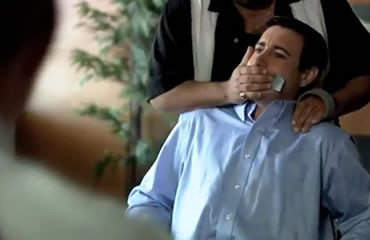
ToiletLabor unions long to end the secret ballot. The Employee Rights Act (ERA) would sack them before that bad idea gets out of the pocket. The ERA guarantees employees’ right to a secret ballot vote.

That’s because voting — like some other things — should be done in private. Super Bowl viewers will learn more about that on Sunday when they see the latest ad from the Center for Union Facts. Take a look:

Organized labor would rather have one of its organizers looking over an employee’s shoulder when he or she votes. We often hear about the intimidation and confusion that results from a “card check” unionization campaign, and this problem is repeated over and over again every day.

The ERA ensures that a secret ballot will be taken when employees decide whether or not they want to join a union and in other labor actions, including strike votes. And union households overwhelmingly support the principles of the ERA.So when you’re watching the game on Sunday, be ready to talk to your friends about the Employee Rights Act and how organized labor wants to invade your private time.

The Union Thug Tradition Continues

Monday, January 14th, 2013

Union violence is far from a new story, but sadly, it’s a recurring one.

Police in Philadelphia say that the vandalism and arson — notably $500,000 in damage done to the site where a Quaker meetinghouse is being constructed by a nonunion company — is “absolutely” related to a union dispute. Michael Resnick, the public safety director in Philadelphia, said that the union members “have a First Amendment right to stand out with their signs and say what they want to say, but they do not have a right to destroy property or hurt people.”

Union members, of course, are feigning surprise that they are being implicated in the investigation of the December 21, 2012 incident. One leader told the Philadelphia Inquirer:

“Getting asked these type of questions is like being asked, ‘When did you stop beating your wife?’ ” said Pat Gillespie, business manager for the Philadelphia Building and Construction Trades Council.

The “union thug” is a reputation that labor has long tried to shed: The “Hug-a-Thug” events this summer wanted to portray a kinder, gentler labor union member. And certainly, the vast majority of union members are average citizens, individuals who can think and act (and donate to political causes) without a union boss telling them what to do.

But the reputation is also one that labor has capitalized on, because it makes their threats all the more credible. Karen Lewis of the Chicago Teachers Union even recalled labor’s heyday, memorializing that “The labor leaders of that time, though, were ready to kill. They were. They were just–off with their heads. They were seriously talking about that.” But it isn’t something she disavows — she followed that up with a quick “I don’t think we’re at that point.” Hopefully she’ll give us a “heads up” when she’s there.

Dennis Duffey, a labor boss in Toledo, Ohio, declared just last week that the City Council President should be “removed, tarred and feathered, or de-nutted” according to reports from the Toledo Blade. There are no reports of an apology from Duffey, but there are plenty of references to Duffey’s image: In 2005, the Blade referred to Duffey as a “union strongman” and a local Democratic Party leader characterized Duffey’s tactics as “twisting arms” in 2011.

The title of the Philadelphia Inquirer’s piece standing alone is also instructive: “Meetinghouse vandalism brings look at tactics in labor disputes.” [emphasis added]. Violence and threats are just items in labor’s toolbox. And thanks to lax federal and state laws, criminal activity by labor unions is too often ignored.

The Employee Rights Act would criminalize union threats of violence — threats that today often evade prosecution.

It also bears mentioning that this report is coming from the Philadelphia Inquirer– a paper that is ensuring it’s own labor strife. It’s sister paper, the Daily News, reports that the two publications, along with the website Philly.com, are facing liquidation on Friday if their unions don’t come to a new agreement with their parent company.

News Roundup: Labor Laughs Off Civility

Wednesday, January 9th, 2013

karenlewisIllinois Labor Crowd Finds Decapitation Hilarious

Chicago Teachers Union President Karen Lewis was a big hit at the Illinois Labor History Society. As the keynote speaker at the Society’s “Salute to Labor’s Historic Heroes from the History Makers of Today” event, Lewis recalled the labor days of yore by saying, “[W]e are in a moment where the wealth disparity in this country is very reminiscent of the robber baron ages. The labor leaders of that time, though, were ready to kill. They were. They were just–off with their heads. They were seriously talking about that.” Minor applause ensued, along with a few laughs. But Lewis, who’s already known for her jokes, thankfully cleared things up: “I don’t think we’re at that point.”

Whew.

CA State Workers May Get a “New” Holiday

Jon Ortiz at the Sacramento Bee’s State Worker blog reports that Assemblyman Roger Hernández has introduced a bill that would re-institute a state holiday on the second Monday of October, one of the two holidays that were eliminated in 2009 (Lincoln’s Birthday was the other).

Most people call this “Columbus Day,” but Hernandez’ bill renames the new holiday “Native American Day.” It would also be a paid holiday for state employees. California public employees already enjoy greater compensation than their counterparts in the private sector. Although the two holidays were replaced with two “professional development days” in 2010, Ortiz reports that Hernández’s bill would not amend that change.

According to the National Institute on Money in State Politics, public sector unions contributed $40,500 to Hernández’s 2012 campaign.

Eighth Circuit “Utterly Dismissive” of NLRB Attempt to Reverse Precedent

The National Labor Relations Board’s (NLRB) decision in D.R. Horton condemned mandatory arbitration agreements barring class actions as a part of the Board’s larger goal of broadening the definition of “concerted activity.” In other words, the NLRB is trying to expand its power. As Allison Frankel’s “On the Case” explains, a three-judge panel in the Eighth Circuit Court of Appeals was “utterly dismissive” of the NLRB’s analysis and granted the Board no deference. Importantly, the judges noted that most court decisions since D.R. Horton have not used the NLRB’s reasoning.

Jimmy Hoffa Still Really Wants EFCA

Teamsters President Jimmy Hoffa Jr. knows a thing or two about steamrolling the opposition. So it’s no surprise that Hoffa supports “reform” of the Senate filibuster, which allows the minority party to stop a bill if it cannot garner 60 votes in its favor. Hoffa explains that if not for the filibuster, EFCA would be the law of the land. Naturally, both parties find the rules afforded the Senate minority abhorrent—but only until that party is in the minority. We’d guess that if the partisan tables were turned and the Employee Rights Act was up for a vote, Hoffa would be singing a different tune.

Unions Pass the Buck For Their Failures

Friday, December 14th, 2012

In a fiery debate on CNBC Thursday, Center for Union Facts Managing Director J. Justin Wilson went up against Thea Lee of the AFL-CIO to discuss the toxicity of the union brand and the need for unions to appeal to members in right-to-work states, including newly-minted Michigan, and not simply take them for granted. Wilson noted that if not for politics, even Democrats would be opposed to membership-by-compulsion.

But instead of confronting these problems, Lee passed the buck and blamed everyone but unions. She blamed billionaires, employers and “attacks.” But even taking her word for it, it’s impossible to account for the complete collapse of labor unionism in the workforce without considering the failure by labor in holding membership.

Lee also noted that labor laws are “antiquated,” something that we’ve been saying for a while as well. The Employee Rights Act (ERA) would greatly improve labor law and help to bring it out of the 1950s. But, somehow, we don’t think that’s the type of law she is looking for.

Labor convenes in the city of brotherly laments

Thursday, August 16th, 2012

A few thousand union members spent their weekend in Philadelphia at an event they called “Workers Stand for America,” better known as their shadow convention. The event was meant to be the answer to the Democratic National Convention, since it is being held in North Carolina, a right-to-work state with the lowest unionized workforce in the country.

But union leaders didn’t like the name “shadow convention,” so they backed off and called it a “rally.”

Which was it?

The most accurate name would be the “crybaby convention.” As Center for Union Facts Executive Director Rick Berman said in this morning’s Washington Times, the Philadelphia event was an “expensive temper tantrum.”

Were Democrats invited to the convention? Of course. The featured speakers included Sen. Bob Casey (D-PA), Rep. Robert Brady (D-PA), and Rep. Debbie Wasserman-Schultz (D-FL), Chair of the Democratic National Committee. And there were plenty of signs supporting President Obama to go around.

The event was just more of the same bellyaching that Big Labor’s  issues were being ignored. But as our executive director points out, this complaint is rather curious:

The AFL-CIO even was kind enough to draft for President Obama a list of things it wanted him to do, titled “Priorities for Day 1.” Topping that list was reducing financial transparency for what unions did with their dues money. The administration happily obliged.

Unions also received lots of goodies in the president’s stimulus package and the health care reform bill. The stimulus package included mandates that union wages be paid on all federal construction jobs. The bill also included a $53.6 billion fund to prevent layoffs of public employees, who are heavily unionized. Additionally, Section 164 of the Affordable Care Act contains a provision to bail out mismanaged union health insurance funds to the tune of $10 billion.

President Obama even signed an executive order that rolled back requirements for employers to post employee guidance about how they could opt out of union dues that were used for lobbying or advocacy they don’t support.

So what else could they possibly want?

They want a “Second Bill of Rights.” Meanwhile, union bosses reject the Employee Rights Act (ERA) at every chance they get.

Included in the “bill of rights” is “The Right to Full Participation in the Electoral Process,” which is, ironically, one of Big Labor’s biggest problems with the ERA. The ERA would guarantee secret ballot voting in certification and recertification votes, as well as in strike votes. Do union bosses think our memories are too short to recall their push to end the secret ballot? (And their failure to do so).

Union bosses can’t seem to get their priorities straight, and their members continue to suffer because of it.

Threats and Violence: Look for the Union Label

Friday, August 10th, 2012

A recently released report on several state laws that protect violent labor union organizers from prosecution is incredibly telling. Egregious conduct, ranging from making a “credible threat to cause serious bodily injury” to engaging in stalking that causes a person to “fear for his or her safety or the safety of a third person; or suffer other emotional distress”, is OK if it’s done in the course of labor activity.

As the United States Chamber of Commerce report explains, there’s bad legal precedent for protecting employees and employers from violent union organizing activities:

State carve outs from the criminal code are likely an outgrowth of a United States Supreme Court decision from 1973 [United States v. Enmons, 410 U.S. 396], in which the court ruled that violence in pursuit of union demands cannot be prosecuted under federal law. In the Enmons case, workers on strike at Gulf States Utilities Company were charged with “firing high powered rifles at three Company transformers, draining the oil from a Company transformer, and blowing up a transformer substation owned by the Company.”

The case was decided based on statutory interpretation of the Hobbs Act. The Supreme Court’s syllabus statement for the case is telling:

The Hobbs Act, which makes it a federal crime to obstruct interstate commerce by robbery or extortion, does not reach the use of violence (which is readily punishable under state law) to achieve legitimate union objectives, such as higher wages in return for genuine services that the employer seeks. (emphasis added)

It turns out that these actions may not actually be criminally punishable.

Legal commentators on both sides of the aisle have complained that many criminal laws that exist at the federal level could be more effectively handled by the states. But here is one instance where the states have fallen short by making exceptions for conduct that is wrongful, but for the favored actor.

It’s because of these shortcomings in federal legislation that the Employee Rights Act (ERA) prohibits union violence in organizing activity. The ERA would preempt these outrageous state law exemptions and protect employees from violence and threats.

We’re supposed to have equality under the law in America, and giving union organizers a free pass on criminal activity flies in the face of this basic right.

RAISE-ing Expectations For a Better Investment

Wednesday, August 1st, 2012

Should you be allowed to sell a stock if it was dropping like a rock?

That’s the question that our executive director contemplates in Forbes. Unfortunately, many Americans can’t do the same with their own poor investment — their labor union.

Rather than supporting efforts such as the Employee Rights Act, unions are busy spending on candidates that a number of their members do not support. Furthermore, union membership is falling as those who have a choice are sending in their “sell” order by not joining the union and not paying its costly dues.

And now, union members have another reason to take stock of their situation and reconsider mailing that next check. Unions are opposing the RAISE Act, which would set the collectively bargained wage as the wage floor, but not the ceiling, in collective bargaining agreements. As the law currently stands, unions have the ability to reject merit raises earned by individual members. Unions say that it undermines the collective bargaining process.

At a subcommittee hearing in the House last week union lawyer Devki Virk, who is on the Board of Directors for an AFL-CIO committee,  testified that the RAISE Act is not fair because workers won’t have a say if they want individual raises. Virk says that it would put the decisions regarding raises in the hands of the employer.

We’ve heard this rhetoric before from both the Teamsters and the SEIU about raises not being “fair” to all employees.

But when you get down to it, the true motivations are clear. As James Sherk notes, it’s because unions know that if employees are in a state where they actually have a choice about being in a union, they’ll understand that it’s a bad investment:

 Collective bargaining presupposes that workers can negotiate higher pay together as a group. That’s why union members will pay hundreds of dollars annually in dues. But if the wage that the union negotiated is $15 per hour and an employee gets a performance-based raise to $20 per hour, then why is he paying union dues?

Unions want exclusive power over their members’ investments, but the ERA and RAISE Act, even with their values rising, aren’t part of the portfolio.

A Proposition for Protection in California

Friday, July 20th, 2012

They say the third time’s the charm.

Some folks in California who care more about the rights of union members than the political maneuvering of their Big Labor bosses hope the saying rings true.

For the third time in the last 14 years, California voters will get to vote on a paycheck protection referendum, which will appear on the November ballot. Proposition 32 is aimed at cutting back on the amount of money that special interests can spend in California’s elections.

The language reads:

(a)   Notwithstanding any other provision of law and this Title, no corporation, labor union, public employee labor union, government contractor, or government employer shall deduct from an employee’s wages, earnings, or compensation any amount of money to be used for political purposes.

(b)   This section shall not prohibit an employee from making voluntary contributions to a sponsored committee of his or her employer, labor union, or public employee labor union in any manner, other than that which is prohibited by subdivision (a), so long as all such contributions are given with that employee’s written consent, and that consent shall be effective for no more than one (1) year.

Ironically, the group opposing the measure has… lots of funding—much of which is taken from payroll deduction—to fight Prop 32. The SEIU has already donated over $1 million to the effort.

Critics say that there are too many loopholes in Prop 32 and they question the motives of the proposition’s supporters. But those complaints completely ignore the focus of paycheck protection—the First Amendment rights of the employees involved. If Californians wish to ban more entities from contributing to political activities, that is another matter entirely. Prop 32 would let employees control where their money is spent without having to wait and see, and then ask for it back next time around.

The Employee Rights Act includes a similar paycheck protection provision that protects private sector employees from having their dues spent on non-representational activities without their written consent, which must be renewed each year.

Polling numbers indicate that around 80 percent of households—union or otherwise—support this federal paycheck protection.

Prop 32 is different than the ERA’s paycheck protection rules, but empower employees and but their interests and rights before the whims of union leaders.