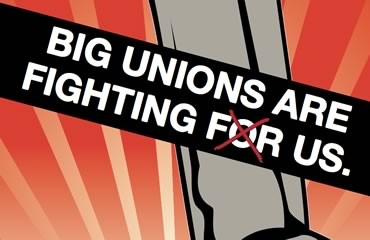
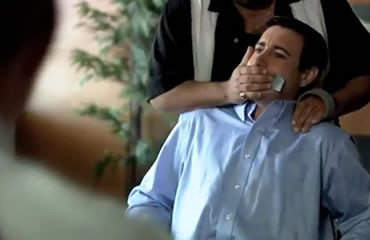
As I said last week, EFCA is still a bad piece of legislation even with the Democrats announcing that they will drop card check. There have been a number of op-eds and editorials making the case against EFCA.
The Eagle-Tribune in MA: “EFCA still bad news, even post compromise”
“The Employee Free Choice Act was a poor policy when it was reintroduced in Congress this spring. It’s still a bad idea now, when the economy is just beginning to show signs of recovery.”
Arkansas Democrat-Gazette: “Card (check) trick”
“JUST WHEN YOU might have thought the secret ballot was safe when it comes to elections over whether to unionize American workplaces . . . the union bosses are back with a “compromise” that sounds all too much like their original power grab. … [T]HE REAL joker in the deck is the provision in the bill that would have a federal arbitrator set the terms of the next contract between management and a new union if they can’t come to terms within 90 days”
Pittsburgh Tribune-Review: “EFCA Still Stinks.”
“And worst of all, still contained in this putrid pandering to unions is binding arbitration. If both sides don’t reach agreement by a set time, a third-party government arbitrator would set salaries and benefits. Corporations might as well turn over the keys to their corporate offices.
What’s being retooled, and not rejected, in Congress makes this union-toadying legislation no less wretched.”
Steven J. Law at the U.S. Chamber of Commerce via cbsnews.com: “Why Card Check “Lite” Is A Non-Starter.”
But the real “poison pill” of forced government arbitration is the way it would spread union pension fund financial problems to healthy companies and workers. Many union-run pension plans are headed toward insolvency because of risky real estate deals and politicized investing. The Card Check bill would empower government arbitrators to force newly-unionized employers into these pensions – putting them on the hook for huge funding shortfalls. Under pension law, a business owner could be stuck paying benefits to people who never worked for them.
And because pension liabilities are included on company balance sheets, a previously healthy firm could have its credit rating ruined overnight by being dumped into a collapsing union pension.